At Skhy, we got interesting use-cases to detect all kinds of counter drone solutions. At the end, we landed acoustic AI as it can scale and detect radio-silent drones.
Check out at Skhy Signal Drone Detection to know more.
What is Acoustic AI?
Acoustic AI is the application of artificial intelligence to analyse, interpret, and act upon audio signals in real-time. It is converting raw sound into structured insights by using advanced signal processing, deep learning, and neural networks. By bridging the gap between hearing data and actionable intelligence, Acoustic AI is enhancing decision-making in industries ranging from healthcare to industrial automation.
Understanding Sound
Sound is nothing but vibrations that travel through the air (or another medium) and reach our ears. When you are speaking, clapping, or playing music, you’re making sound waves. These waves are having different properties—like pitch (high or low), loudness (soft or loud), and tone (the unique quality of a sound). Acoustic AI is helping machines to understand these sound waves by breaking them into measurable features.
How It Works
After a lot of hits and trials, we landed on this workflow.
- Data Acquisition
- Microphones, IoT sensors, or industrial equipment is capturing sound signals.
- External data sources like YouTube, open-source datasets, or proprietary industrial audio libraries is providing additional training data.
- Audio Preprocessing & Feature Engineering
- Sound is converting into digital signals and is processed through filtering, noise reduction, and normalization techniques.
- Feature extraction methods (e.g., Mel spectrograms, MFCCs, wavelet transforms) are highlighting key characteristics for analysis.
- How Feature Extraction Powers Acoustic AI:
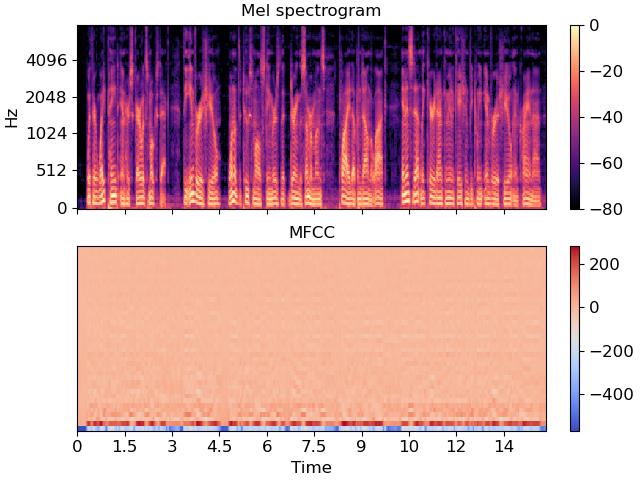
There are many features extraction we use but here are major ones:- MFCC (Mel-Frequency Cepstral Coefficients): Extracting the essential frequency-based characteristics of sound, similar to how human ears are perceiving pitch and tone. Used for speech recognition and emotion detection.
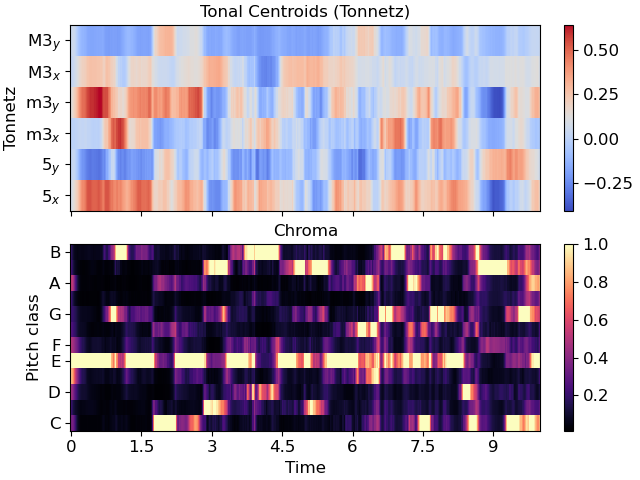
- Chroma Features: Capturing musical properties by analysing pitch and harmonic content, valuable for music classification.
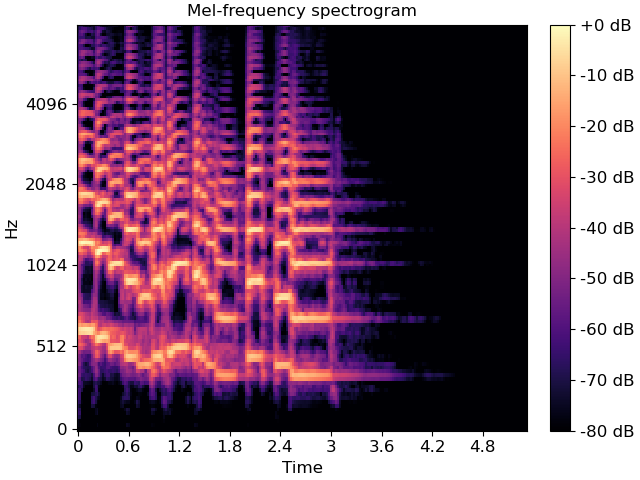
- Mel Spectrogram: Converting sound into an image-like representation to identify complex audio patterns like machinery noise or wildlife calls.
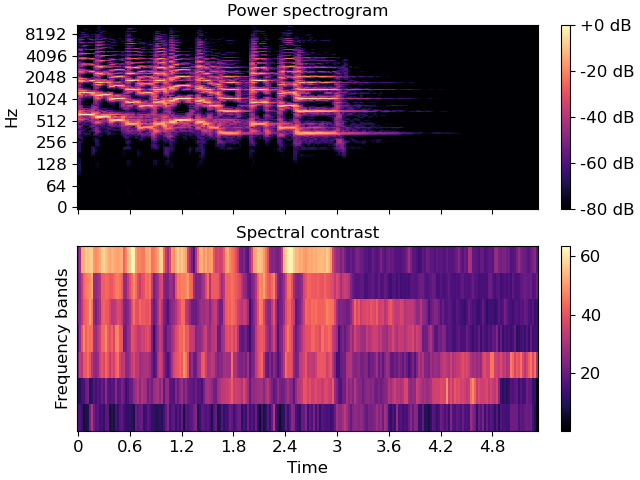
- Spectral Contrast: Measuring the difference between peaks and valleys in the frequency spectrum, making it useful for distinguishing between clear and noisy sounds.
- Tonnetz (Tonality Representation): Analysing the harmonic structure of sounds, aiding in music genre classification and sound quality assessment.
- Model Training & Fine-Tuning
- AI models, including Ensemble Classifiers, CNNs, RNNs, and transformer-based architectures, is learning to classify, predict, or generate audio-based insights.
- Reinforcement Learning with Human Feedback (RLHF) is refining models for context-aware decision-making. For e.g., for velocity estimation, Human Feedback is important to estimate velocity.
- Inference & Decision Making
- Real-time or batch processing is classifying sounds, detecting anomalies, and triggering automated workflows.
- Outputs are visualised through dashboards, alerts, or integrated into broader enterprise systems.
- Deployment & Scalability
- Flexible deployment options: Cloud (AWS, Azure, GCP), Edge AI (embedded devices), and on-premise installations.
- Integrating with external industrial data sources, combining sound-based intelligence with broader analytics ecosystems.
Applications Across Industries
- Healthcare: Detecting respiratory conditions via cough or breathing analysis.
- Manufacturing: Predictive maintenance by identifying machinery malfunctions through acoustic signatures.
- Security & Surveillance: Detecting abnormal sound patterns for threat detection and situational awareness.
- Smart Assistants & IoT: Enhancing speech recognition, noise cancellation, and voice-based automation.

 BABU PRIYAVRAT
Leave a comment